
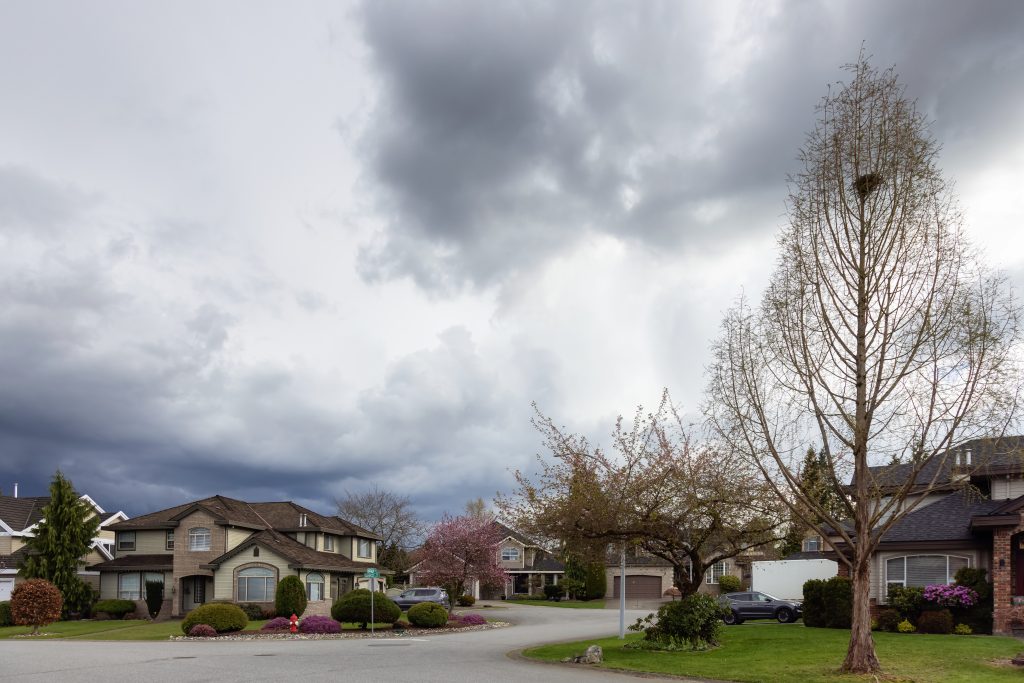
Indiana’s storm season has a rhythm to it. The first big system rolls through in May, and by mid-June, most HOA communities have already had one or two close calls. By the time July arrives, the Boards that were prepared early are the ones replacing nothing, while the rest are scrambling to coordinate emergency repairs across multiple streets at once.
This article is a practical reference for HOA Boards trying to get ahead of that pattern. It covers the kinds of storm damage that most often show up, what to inspect before storm season starts, what to walk through after a storm passes, and how to decide between a quick repair and a full replacement. The goal is simple: protect the community streetscape before peak storm season and recover quickly when something does come down.
Why Midwest Storm Season Hits HOA Streetscapes Hard
Central Indiana sits in a part of the country that sees a concentrated stretch of severe weather between May and July. Thunderstorm clusters, straight-line winds, and the occasional tornado all show up in that window. Hailstorms tend to come earlier in the spring. Heavy summer downpours and saturated ground can finish off a post that was already loosening through freeze-thaw cycles.
Three things make HOA streetscape elements especially vulnerable:
- They sit exposed at the curb with no nearby structures to break the wind
- They are often planted in shallow or compacted soil that gives way quickly when saturated
- A single straight-line wind event can damage dozens of boxes, posts, and signs across a community at the same time
That last one matters most. A bad storm can turn a slow replacement timeline into a same-week emergency for a Board without a plan in place. For more on the underlying durability issues, see our guide to preventing mailbox damage from harsh weather.
Common Storm Damage to Mailboxes, Signs, and Lights
Storm damage to community streetscape elements falls into a few recurring patterns:
- Mailboxes torn from posts. Wind catches the open door of an unlatched box and rips the entire box loose, often taking screws and brackets with it.
- Posts knocked sideways or uprooted. Saturated soil offers little resistance once a strong gust grabs the post.
- Bent or detached street sign blades. Wind torque concentrates at the sign mount, leaving the blade bent at the bolt point or hanging by a single fastener.
- Streetlight pole sway and electrical faults. Repeated flexing can loosen pole mounts and trigger intermittent electrical issues that show up days or weeks after the storm.
- Cosmetic damage from windblown debris. Branches and gravel can dent powder coat, scratch finishes, and chip lettering.
Some of these can be tackled the day after the storm. Others need a streetscape partner with manufacturing capacity to replace the part outright.
Pre-Storm Checklist for HOA Boards
A short pre-season walk-through catches the issues most likely to fail under stress. Run it in late April or early May:
- Check every mailbox door for a working latch and tight hinges. Replace anything loose.
- Inspect each post at ground level for rot, rust, or soil erosion around the base.
- Push laterally on each post. If it moves, the footing needs attention.
- Tighten visible screws and bolts on mailbox brackets, sign mounts, and light fixtures.
- Walk the community sign by sign. Note any bent blades, faded faces, or loose hardware.
- Photograph each location at the start of the season for an insurance baseline.
- Confirm the Board has a current contact and quote on file with a streetscape provider.
Our seasonal mailbox care guide covers the homeowner-side prep that complements the Board walk-through.
Post-Storm Inspection Checklist
After a major storm passes, run a second walk-through within 48 hours. Same general loop, but the focus changes:
- Document every damaged mailbox, post, sign, and light with a photo and address.
- Note any locations where mail delivery is now impossible. These are the priority replacements.
- Check posts for new lean. A post that survived the storm but shifted may fail in the next one.
- Inspect light fixtures for visible damage, exposed wiring, or non-functioning lamps.
- Flag any signs that have rotated, bent, or lost reflectivity. Liability risk applies here.
- Share the photo log with the streetscape provider for an estimate.
For more on identifying sign safety issues that should be addressed quickly, see our guide to street sign failures that cause safety issues.
Repair or Replace? A Quick Decision Guide
Not every storm-damaged element needs to be replaced. A few judgment calls help the Board move fast without overspending:
- Repair when the damage is cosmetic, the structure is intact, and the hardware can be reseated. A bent latch, a scuffed door, or a slightly twisted sign mount.
- Replace when the box, post, or sign has structural damage, when the original color or style is no longer in production, or when matching repairs across multiple units would cost more than a new install.
- Coordinate when more than a handful of units across the community are affected at once. A coordinated replacement is faster and looks better than a string of one-off repairs.
You can request an assessment, and we can help the Board sort which is which.
By Otto’s Streetscape Solutions. Request a damage assessment or pre-season inspection at ostreetscape.com.