
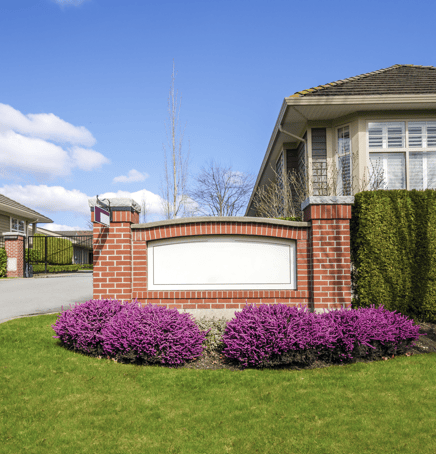
A good community entrance sign is one of those things people only notice when it is failing. The lettering starts to chalk. A panel cracks. The lighting has been out for a month. None of these is catastrophic on its own, but together they signal to every visitor and prospective buyer that the community is not paying attention.
This guide is for HOA Boards thinking about installing a new entrance monument sign or replacing an aging one. We cover what materials hold up best in central Indiana weather, when integrated lighting earns its place, how long a quality sign should last, and how to decide between refurbishing what you have and a full replacement. The goal is a sign that holds up for the long run and looks intentional the day it goes in.
Why the Entrance Sign Matters More Than Most HOA Investments
For most communities, the entrance monument sign is the single most visible piece of infrastructure the HOA owns. It is the first thing residents see when they pull onto their street, and the first thing prospective buyers notice when they visit. It signals the standard to which the community holds itself.
That visibility cuts both ways. A well-built sign maintained over time supports property values and gives the community a recognizable identity. A neglected sign sends the opposite message, even if nothing else in the community has slipped. Our perspective on where HOA dollars yield the most visible return is focused on decorative vs. functional streetscape elements, which puts entrance signage at the top of the list.
Common Monument Sign Materials and How They Compare
The four most common materials for HOA entrance monument signs each carry a different mix of look, durability, and maintenance demand:
- Brick and stone. The traditional choice. A masonry monument paired with cast aluminum or painted lettering gives the most permanent and substantial look. Long lifespan with proper construction. Higher upfront cost. Repairs require a mason.
- Cast aluminum. A lighter, lower-maintenance option that can be cast in decorative shapes, brick cannot match. Holds powder coat finishes for decades. Does not rust. Often used for lettering or accent panels on a masonry base.
- Composite or HDU foam-core. Used most often for sign faces and decorative trim. Light, dimensionally stable, and easy to customize. Less impact-resistant than aluminum or masonry. Best in protected settings away from vehicle traffic.
- Powder-coated steel. Affordable and structurally strong. Vulnerable to corrosion if the finish is compromised. Works well for sign supports and posts, less often for the visible face.
Most HOA monument signs combine two or three of these. A masonry base with cast aluminum face and lettering is one of the most durable and recognizable combinations for central Indiana communities. For more on how material selection shapes outcomes, see our guide to selecting the right material for street signs and lights.
Lighting Integration and Realistic Lifespan
Lighting is what separates a sign that works at all hours from one that disappears at sunset. The Board has a few choices:
- No lighting. The lowest-cost option. Acceptable for entrances with strong nearby streetlight coverage.
- Solar-powered fixtures. No trenching or electrical work required. Quality and brightness have improved meaningfully in recent years.
- Hardwired lighting. The most reliable option for consistent year-round illumination. Requires electrical conduit and upfront permitting, but lasts the longest.
In terms of lifespan, a well-built monument sign should last 20 years or more when materials are matched to the climate. Cast aluminum components routinely outlast painted or printed faces. Lettering and panel inserts may need refreshing in the 10 to 15-year range, even when the structure is sound. Sealants on a masonry base usually need attention every 5 to 7 years.
Refurbish or Replace, and What to Expect From the Process
A common question from Boards: Do we need a new sign, or can we restore the one we have? A few rules of thumb:
- Refurbish when the structure is sound, lettering can be replaced or repainted, and the existing style still matches the community’s standards. Cleaning, repainting, and re-lettering can extend a sign’s life by 10 years for a fraction of replacement cost.
- Replace when the structure is damaged, the design feels dated, or repairs would be visible against the rest of the build.
When you move ahead with a project, expect the process to include a site visit, permit research, design approval, manufacture, and installation. Most custom builds run 6 to 12 weeks from quote to installed sign. HOAs in an Exclusive Provider Program relationship often see faster turnaround because the design specs are already on file.
To get a quote tailored to your community, request an estimate, or explore our signs and lights service hub.
By Otto’s Streetscape Solutions. Request a quote for your community entrance sign at ostreetscape.com.