
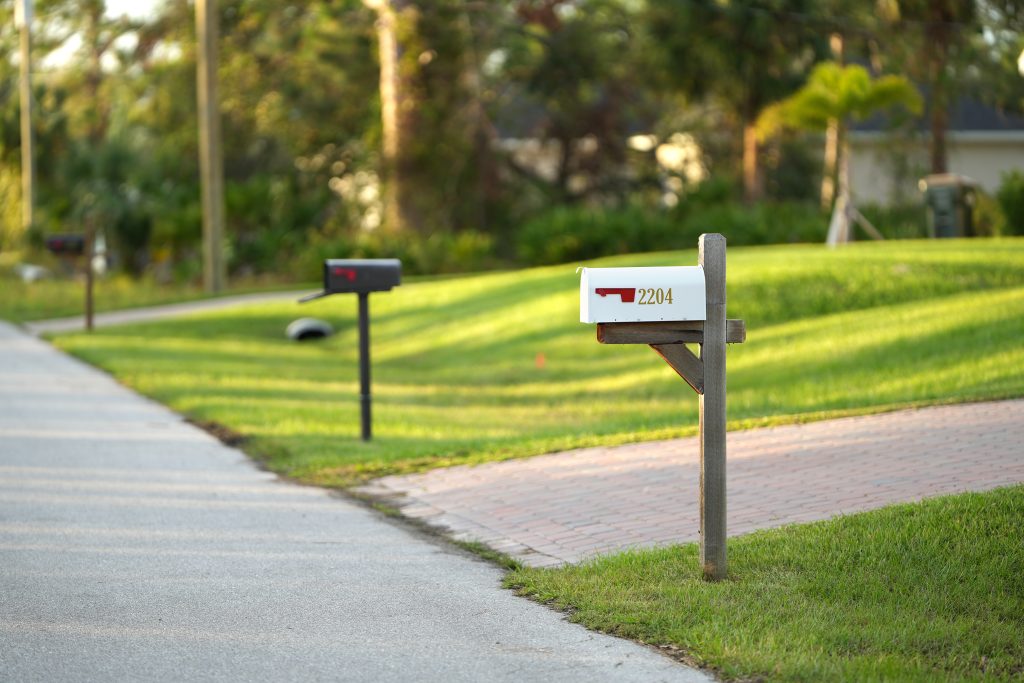
What USPS regulations do HOA boards need to follow when specifying community mailboxes? The short answer is that federal standards set a firm baseline for specific heights, setback distances, construction requirements, and carrier clearance, and HOA rules must build on them, not go against them. This checklist walks boards through each requirement so their communities remain compliant, consistent, and free of delivery interruptions.
Why USPS Compliance Matters for HOA Communities
Before an HOA board writes a single mailbox policy of its own, it is essential to understand that USPS regulations serve as the legal floor. Under Title 39 of the U.S. Code, any curbside mailbox used for USPS delivery is considered postal infrastructure, and the Postal Service sets the standards it must meet to receive mail. A carrier who finds a mailbox out of compliance is authorized to suspend delivery and leave a notice requiring correction. Local ordinances and HOA rules may add requirements on top of USPS standards, but they cannot override or contradict them.
For HOA boards, this layered structure is an advantage when properly understood. When community design standards align with USPS requirements from the start, residents face no conflict between following HOA guidelines and keeping their mail delivered. The challenge arises when a board tries to enforce aesthetic preferences that inadvertently push mailboxes out of federal compliance, which is why starting with the federal baseline is always the right first step.
The Core USPS Requirements at a Glance
HOA boards should incorporate these exact measurements into their community standards and include them in any replacement or installation guidelines given to residents:
-
Height
The bottom of the mailbox opening must be between 41 and 45 inches from the road surface, per USPS Domestic Mail Manual section 508.3.2.3. This range allows a carrier in a right-hand drive vehicle to deposit mail without leaving the vehicle.
-
Setback from the curb
Mailboxes must be positioned 6 to 8 inches back from the front face of the curb, or from the road’s edge where no curb is present.
-
Carrier clearance
Snow, vegetation, and debris must be kept clear of the mailbox at all times. A carrier who cannot safely access a box is authorized to skip delivery and leave a notice.
-
Address identification
House numbers must appear on the mailbox in numerals at least 1 inch tall and clearly visible from the road. If the mailbox serves a home on a different street, the full street address is required rather than just the house number.
What Does “USPS-Approved” Actually Mean?
Every commercially manufactured curbside mailbox that meets USPS size and construction standards carries the Postmaster General’s seal of approval. This seal is the clearest signal an HOA board can look for when specifying approved mailbox models for its community. Without it, there is no straightforward way to confirm that a box has been independently tested and verified against federal requirements.
If a resident builds their own mailbox or purchases a custom-made one, it must still meet Postmaster General standards, and the homeowner must show the plans or the finished box to the local postmaster before installation. For HOA boards, the practical recommendation is to specify only approved models in the community’s Covenants, Conditions, and Restrictions. Doing so protects residents from inadvertently installing a non-compliant unit and saves the board from having to evaluate custom submissions case by case.
Locking mailboxes falls under the same approval requirement. They are permitted in residential settings, but a carrier must be able to deposit mail through a slot without using a key or any other credential. Only the homeowner retrieves mail using a key or combination. Any locking mailbox installed on a curbside post must carry the Postmaster General’s seal to confirm it has been designed and tested for keyless delivery.
Where HOA Standards and USPS Rules Overlap
USPS regulations define minimums. HOA rules can go further by specifying a particular finish type, post material, or address number style, as long as those specifications do not push the installed unit outside of federal compliance. This is where boards have real room to shape the visual character of a neighborhood without creating conflict with federal requirements.
Boards most commonly run into trouble when aesthetic requirements unintentionally conflict with USPS standards. A decorative mailbox that looks attractive from the curb but lacks a properly functioning door, sits at the wrong height, or uses materials that cannot withstand weather can trigger a compliance notice, regardless of how well it fits the neighborhood’s design scheme. The visual appeal of a mailbox and its federal compliance are entirely separate questions, and both must be addressed before a model is approved.
USPS requires durable, weather-resistant construction. Steel and aluminum are the most common compliant choices, and powder-coated finishes are widely recommended because they resist rust and weathering over the years of outdoor exposure. Wooden mailboxes are not prohibited, but they must be structurally sound and weather-sealed. A door that warps or fails to close fully is grounds for a compliance notice regardless of how attractive the box looks from the street.
Obviously, HOA requirements can be tricky, especially when these requirements overlap with other industries. This is why it’s important to look at detailed resources to ensure your mailbox meets HOA standards. You’ll also want to make sure you avoid common HOA streetscape violations.
How to Audit a Community for Compliance
A community-wide mailbox audit does not need to be complicated. Boards can conduct an initial review by walking or driving the neighborhood with the USPS numeric requirements in hand, flagging any mailboxes that fall outside the approved height or setback range, show visible structural damage, or lack proper address identification.
Height and setback are the two most commonly overlooked issues in established communities. Posts settle over time, and a mailbox that was installed correctly ten years ago may no longer sit at the right height. Curb repairs and road resurfacing can also shift the effective grade, changing the measurement even if the post itself has not moved. Checking both dimensions during an annual walkthrough catches problems before they result in suspended delivery.
Structural condition matters just as much as placement. A door that does not latch, a post that leans, or vegetation that has grown up around the box are all grounds for a carrier to skip delivery. Under federal regulations, keeping the mailbox accessible and in good repair is the homeowner’s responsibility. HOA boards that communicate this expectation clearly, before winter in particular, prevent delivery interruptions and reduce the enforcement complaints that follow them. Of course, there are many more factors to consider depending on how your HOA operates. For that reason, it is imperative to research the most common HOA streetscape questions and an HOA information page as you navigate these requirements.
Working with a Streetscape Provider on a Community-Wide Replacement
When a community is ready to move from audit to action, whether that means replacing aging mailboxes, standardizing after years of inconsistent installations, or upgrading to locking units across the board, partnering with a provider who already understands both USPS approval requirements and HOA design standards makes the process significantly more efficient.
Otto’s Streetscape Solutions works with HOAs across central Indiana, including Greenwood, to specify, manufacture, and install mailbox and post solutions built to USPS compliance from the start. All numeric requirements are incorporated into their standard offerings, which removes the guesswork for both the board and the homeowner. Their team can also support boards navigating community-wide locking mailbox upgrades, helping confirm that approved models meet federal standards before they are written into CC&Rs.
A well-managed HOA mailbox program comes from a written policy that reflects USPS requirements, a clear approval process for new installations and replacements, and maintenance expectations communicated consistently to every resident. When those three elements are in place, compliance becomes a community norm rather than a recurring enforcement issue.
Partner with Otto’s Streetscape Solutions!
At Otto’s Streetscape Solutions, we pride ourselves on delivering exceptional craftsmanship, personalized service, and lasting value to our customers. Contact us today to schedule a consultation and discover how we can elevate your neighborhood’s streetscape with our custom mailboxes, posts, and street sign solutions.
Frequently Asked Questions
What is the standard USPS mailbox height?
The bottom of the mailbox opening must be between 41 and 45 inches from the road surface, per USPS Domestic Mail Manual section 508.3.2.3. This applies to all curbside residential mailboxes.
How far from the curb should a mailbox be installed?
USPS requires mailboxes to be set back 6 to 8 inches from the front face of the curb. Where no curb is present, the measurement is taken from the road’s edge.
Can an HOA legally require a specific mailbox model?
Yes. An HOA can specify approved mailbox models in its CC&Rs as long as those models meet USPS standards and carry the Postmaster General’s seal of approval. A board cannot require a model that pushes residents out of federal compliance.
Who is responsible for repairing a non-compliant mailbox in an HOA?
Under federal regulations, the homeowner is responsible for keeping their mailbox structurally sound, accessible, and in good repair. The HOA board can enforce community standards and issue notices, but the obligation to maintain the box rests with the individual homeowner.
Does USPS inspect HOA mailboxes?
USPS does not conduct proactive community-wide inspections. Carriers are authorized to suspend delivery to any individual mailbox that is inaccessible or non-compliant and to leave a notice requiring correction. Repeated failures can trigger a formal review from the local postmaster, who has final authority on placement disputes.